
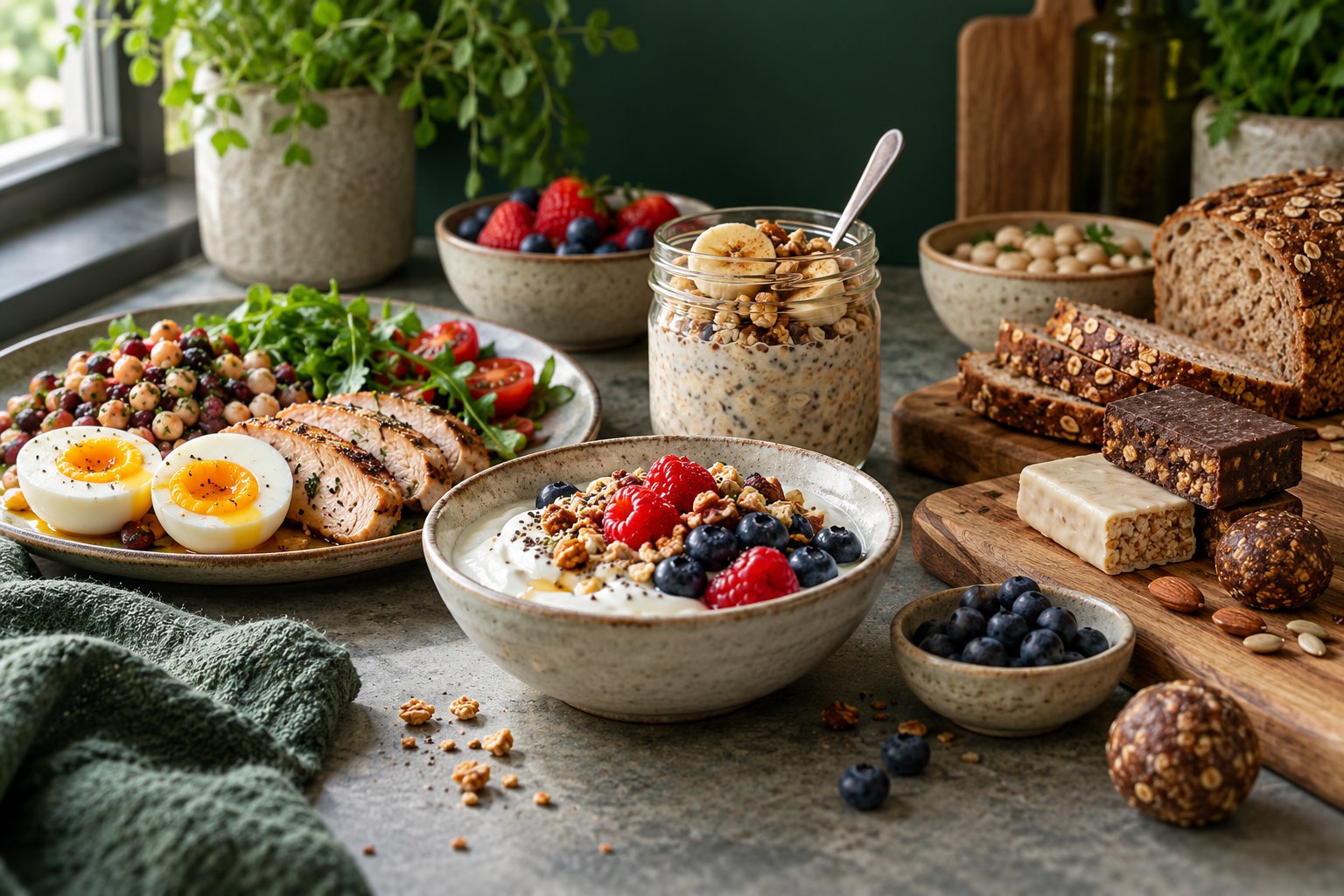
Walk into a grocery store today and try to find an aisle that hasn't been touched by the protein craze.
Protein cereal? Absolutely.
Protein pancakes? Of course.
Protein coffee? Why not?
Protein Pop-Tarts?
Apparently, we've reached that point, too.
We've gone from a time when protein powders were primarily associated with bodybuilders and serious athletes to a marketplace where almost everything seems to be competing for the highest protein number on the package.
And here's the interesting part. I don't think this is just another passing food trend.
I think we're seeing a significant change in how consumers think about nutrition, aging, and what they expect from the food they buy.
But is all this extra protein really necessary? And more importantly, are food manufacturers creating genuinely better products, or are we watching the latest marketing race unfold?
Let's look at what's happening.
Protein has a new audience
For decades, the protein conversation was fairly predictable.
Athletes wanted muscle. Bodybuilders wanted size. Supplement manufacturers wanted to sell tubs of powder large enough to last through a winter storm.
Today, the conversation is completely different.
We're talking about women interested in maintaining muscle as they age, busy professionals looking for meals that keep them satisfied longer, older adults trying to preserve strength and mobility, and millions of consumers focused on weight management.
Protein has moved from sports nutrition into everyday wellness.
And that shift matters.
Consumers aren't necessarily asking how much muscle they can build. They're asking whether the food they're eating will help them feel better, stay full longer, maintain a healthy weight, and remain physically active later in life.
That's a much larger market than the traditional fitness community.
The GLP-1 effect is changing the entire food industry
One of the biggest influences on this trend is the growing use of GLP-1 medications such as Ozempic and Wegovy, along with related medications such as Zepbound.
These medications have changed the weight-management conversation because they can substantially reduce appetite and food intake.
For transparency, I've been a GLP-1 user since the beginning of 2026 and have had great results. This subject is personal for me as well as professional. Eating smaller portions has made me pay closer attention to what each meal provides.
But here's something I believe the food industry is finally starting to recognize.
When consumers eat less, the nutritional value of what they do eat becomes more important.
Think about that from a product-development perspective.
If someone previously consumed a large breakfast, lunch, dinner, and several snacks but now eats significantly smaller portions, manufacturers have an entirely different formulation challenge.
They need to deliver appropriate nutrition in less food.
Protein becomes important because weight loss can involve the loss of both fat and lean tissue. Adequate protein, combined with resistance exercise, helps support muscle preservation.
But protein isn't the entire solution. Fiber, vitamins, minerals, hydration, and overall energy intake still matter.
The commercial evidence is becoming hard to ignore.
Research released by the National Frozen & Refrigerated Foods Association in September 2026 found that 52% of surveyed GLP-1 users reported buying more high-protein dairy products, while 48% reported purchasing more single-serve or portion-controlled foods. Read the NFRA research.
That's not just a shift in appetite. It's a shift in the shopping basket.
Why protein works: The science behind the obsession
Let's talk about what protein actually does.
First, protein contributes to satiety, or that feeling of being satisfied after eating.
Protein-containing meals can influence appetite-related hormones, including GLP-1 and peptide YY, although responses vary with meal composition and the individual.
That doesn't mean eating a protein bar produces anything close to the effect of prescription GLP-1 medication. Those are two very different mechanisms and magnitudes of action.
But protein can be a useful part of managing hunger and overall calorie intake.
Second, protein has a relatively high thermic effect.
In simple terms, your body uses energy to digest, absorb, and process food. Research commonly places protein's thermic effect around 20–30% of its energy content, compared with approximately 5–10% for carbohydrates and 0–3% for fat. See the National Academies review of energy expenditure.
Does that mean you can eat unlimited protein and somehow burn away the calories?
Of course not.
The difference in actual calorie expenditure is usually modest. But combined with protein's effects on appetite and muscle maintenance, it helps explain why higher-protein eating patterns can be useful for some people managing their weight.
Third, protein plays a role in glucose regulation, particularly when part of a balanced meal containing carbohydrates, fiber, and fat.
The important distinction is that adding protein does not automatically make a sugary or highly refined product metabolically healthy.
Which brings me to an important question.
Just because a product contains 20 grams of protein, does that make it a good nutritional choice?
Not necessarily.
Protein and longevity: This is where things get interesting
I believe one of the most important reasons protein is attracting attention has less to do with how people look and more to do with how they want to live.
We naturally experience changes in muscle mass, strength, and function as we get older. The rate varies considerably depending on physical activity, nutrition, health, and other factors.
Eventually, clinically significant muscle loss and weakness can contribute to sarcopenia, a condition associated with reduced mobility, frailty, and loss of independence.
Nobody wants to reach their seventies and struggle to carry groceries, get out of a chair, or walk comfortably through an airport.
And that changes the conversation.
Muscle becomes less about appearance and more about independence.
Adequate protein provides the amino acids necessary to maintain and repair muscle tissue. Combined with resistance training, it can help support strength and physical function as we age.
Protein also contributes to the structural framework of bone, although bone health depends on other factors, including calcium, vitamin D, and physical activity.
The important point is that protein is one part of a long-term healthy-aging strategy, not a substitute for exercise or an automatic guarantee against muscle loss. Read more from the National Institute on Aging.
I think that's a message worth discussing well beyond the fitness community.
What's happening inside food manufacturing plants?
This is the part of the story that particularly interests me as a food scientist.
Consumer trends are easy to identify from a supermarket shelf. Translating those trends into products that can actually be manufactured consistently is an entirely different challenge.
Take something as simple as adding protein to bread.
You cannot necessarily remove a portion of wheat flour, replace it with protein powder, and expect the same dough.
Depending on the protein source, you're potentially changing water absorption, dough rheology, gluten functionality, mixing characteristics, fermentation behavior, texture, and shelf life.
The same thing happens in snack bars, cereal, pasta, frozen meals, and beverages.
Protein isn't simply another ingredient. It becomes part of the product's structure.
In baked goods, additional protein can change tenderness, browning, expansion, and moisture retention.
In beverages, formulators may encounter sedimentation, viscosity changes, heat stability problems, or unwanted flavors.
In protein bars, maintaining softness during shelf life can be a major hurdle.
And manufacturers have to solve these problems while maintaining an acceptable selling price.
Consider some of the products reaching the market:
- Pop-Tarts Protein, introduced with 10 grams of protein per serving.
- Kraft Mac & Cheese PowerMac, announced in 2026 with 17 grams of protein and 6 grams of fiber per serving.
- Doritos Protein and other reformulated snack products.
- Nestlé Vital Pursuit frozen meals, designed around portion control and nutritional priorities relevant to GLP-1 users.
These are examples of major food companies responding to a market that increasingly expects protein to be available in familiar, convenient foods.
Meanwhile, ingredient suppliers and manufacturers are investing in protein technologies, including new whey-based ingredients and systems designed to improve functionality, texture, and stability.
Nestlé, for example, publicly described its development of a whey protein microgel technology in April 2025 as part of its weight-management nutrition efforts. Read Nestlé's technology announcement.
The manufacturing opportunity is significant, but so is the technical responsibility.
Adding protein is easy to propose in a conference room. Delivering an appealing product at commercial scale is another matter.
Are we improving nutrition or just creating another marketing claim?
Here's where I think consumers need to become a little more skeptical.
A package prominently displaying 20 grams of protein tells you something useful.
But it doesn't tell you everything.
How many calories are in the serving? How much added sugar? How much saturated fat? What about fiber, sodium, and overall ingredient quality?
And is the additional protein actually providing value to the consumer?
If a product contains substantially more protein but still delivers poor overall nutrition, we shouldn't automatically consider it a health food.
There's also a practical question: how much protein does someone really need?
The longstanding U.S. adult Recommended Dietary Allowance is 0.8 grams per kilogram of body weight per day for generally healthy adults. That represents a baseline designed to meet the needs of nearly all healthy individuals, not necessarily the ideal target for every older adult, athlete, or individual losing weight.
Higher amounts may be appropriate depending on age, activity, clinical circumstances, and goals. People with certain medical conditions, including kidney disease, need individualized guidance.
More is not automatically better.
What matters is whether intake is appropriate, nutritionally balanced, and supported by healthy habits.
What I think happens next
I don't expect protein to disappear from grocery store marketing anytime soon.
But I do think the conversation will evolve.
Simply adding another five or ten grams of protein won't necessarily be enough to differentiate products in an increasingly crowded category.
Consumers will start asking more sophisticated questions about protein quality, digestibility, taste, ingredient transparency, and the overall nutritional profile.
For manufacturers, the challenge will be developing foods that deliver meaningful nutrition without sacrificing the sensory qualities consumers expect.
And for food scientists, this is an exciting time.
Because the next competitive advantage may not come from putting a bigger protein number on the package.
It may come from figuring out how to make better food.
That same idea is behind my book, Still Love Food: The GLP-1 Cookbook. It includes 48 protein-first recipes for small appetites and family meals, plus 28 days of meal preps. I wanted to make it easier to enjoy food while giving smaller meals some thought and purpose.
My takeaway: Protein deserves its place in the nutrition conversation, especially when we're talking about muscle preservation, weight management, and healthy aging. But we need to look beyond the marketing and remember that good nutrition is more than a single macronutrient.
After all, if we can put protein into a Pop-Tart, the least we can do is ask whether we should.
Ray Sierengowski is a food scientist, chef, and founder of Fire In The Kitchen. The Green Light Lab explores the science, technology, and business decisions behind the foods we eat.