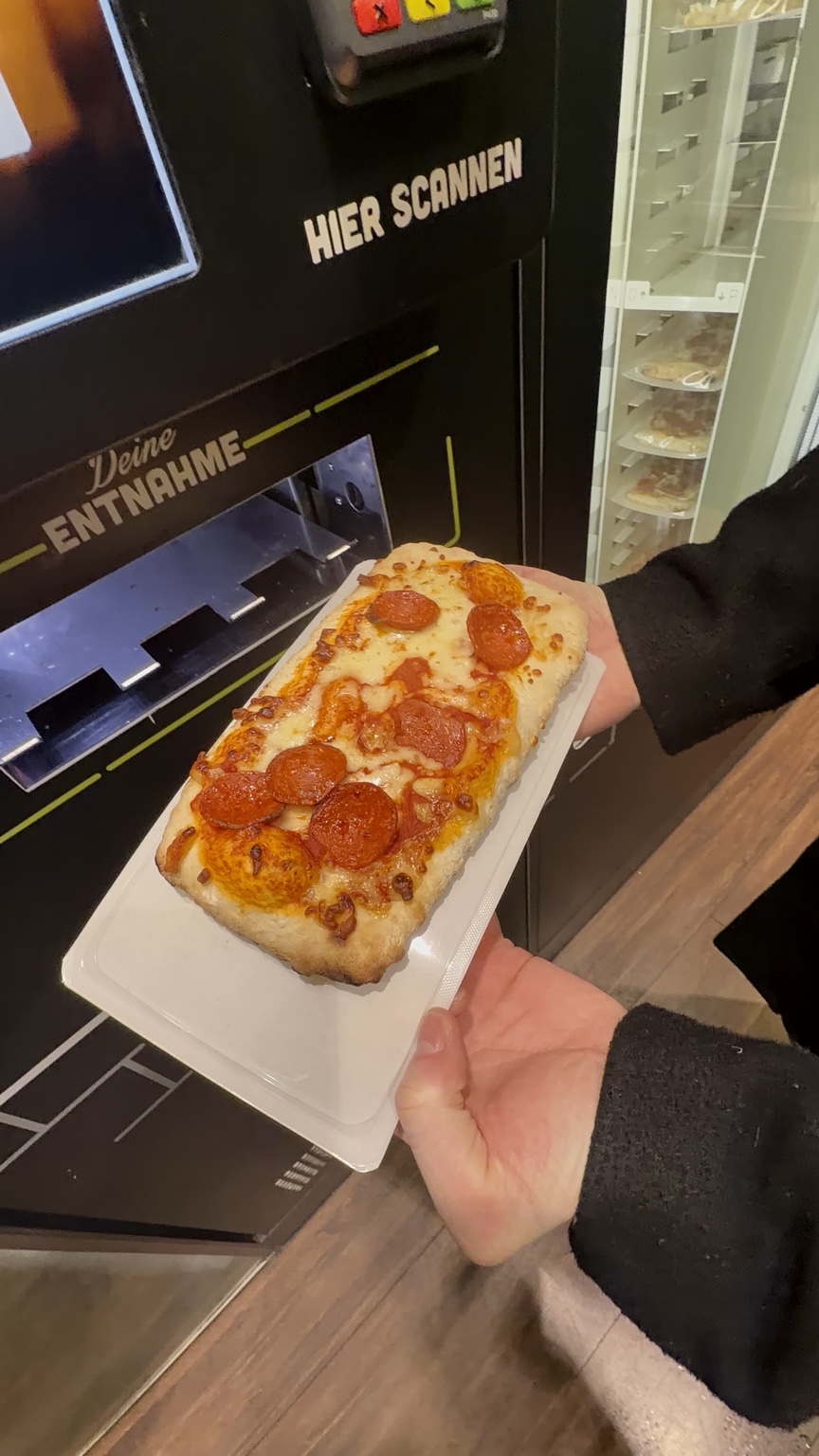
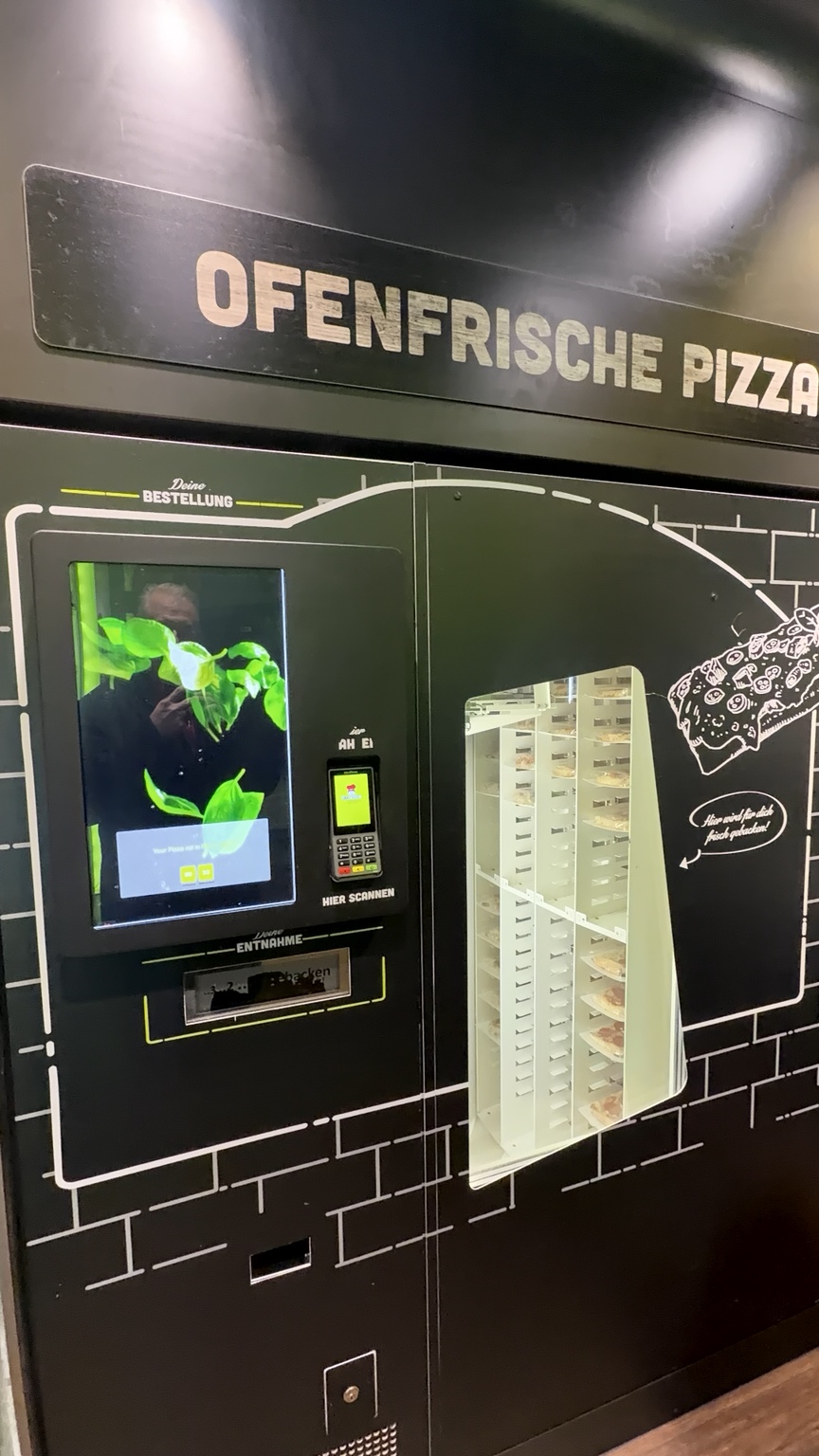
During our recent visit to Salzburg, we came across a pizza vending machine and decided to try it.
For a customer, the idea is easy to understand: choose a pizza, pay, and wait for the machine to deliver it.
For a food scientist, chef and small business owner, that short transaction raises a much longer list of questions.
Who prepared the pizza? How did it get there? What determines when it can still be sold? Who responds if the customer pays and nothing comes out?
Automation can move work away from the point of sale. The work still needs an owner.
Why this is more than a travel curiosity
On November 11, 2026, California Pizza Kitchen announced plans with Ranger Group for a phased rollout of hundreds of automated pizza kiosks at U.S. military installations. That is a stated deployment plan, not a verified count of machines already operating. [1]
It is a useful example of a brand exploring how to serve customers outside a conventional restaurant.
The question for an independent operator is not simply whether a machine can produce a pizza. It is whether the complete operation can deliver the intended product reliably at a location and time customers value.
What does a pizza vending machine actually do?
Systems differ. Do not assume every kiosk mixes dough, stretches it and builds a pizza after an order.
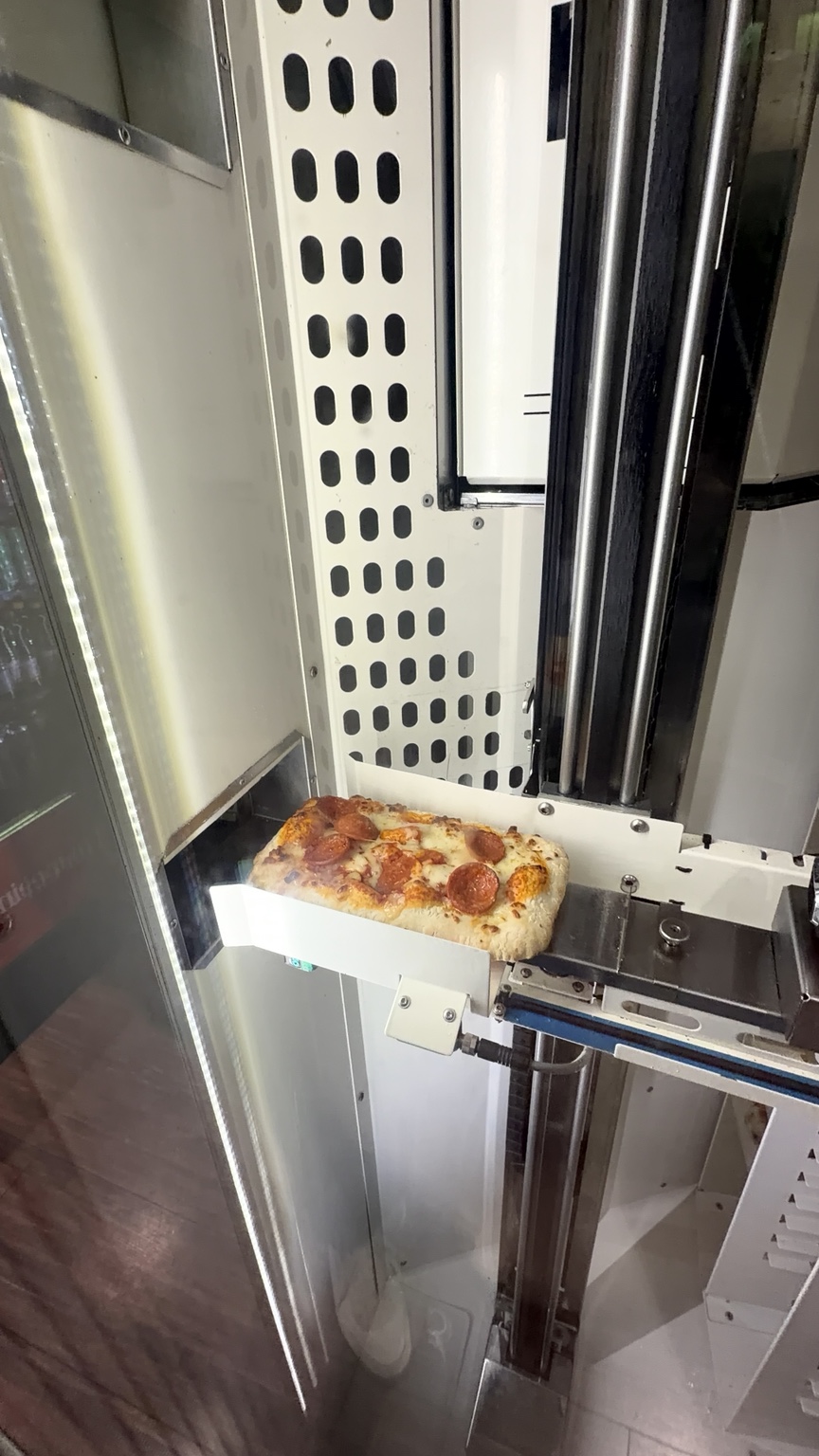
For one documented example, PizzaForno describes moving a selected pizza from refrigerated storage into an oven and then to a delivery slot. Its documentation also describes inventory-date tracking. These are manufacturer descriptions of that system, not a universal explanation of every pizza machine or independent validation of performance. [2]
Ask where preparation ends and automation begins. That answer changes the production plan, staffing, storage needs and evaluation.
“Baked when ordered” and “made from scratch when ordered” describe different things.
The important product is the one you can sell consistently
A pizza developed for an immediate restaurant bake should not automatically be treated as ready for a different storage and cooking process.
Begin by defining the actual product entering the machine. Is the base raw, partially baked or fully baked? When are sauce and toppings added? What packaging is part of the approved cooking process? Which ingredients and recipes are supported?
Those are questions for the specific system and supplier. Do not substitute a generic pizza recipe or ordinary packaging without validating compatibility.
Then evaluate the finished result across the intended operating window.
One good demonstration pizza establishes that a good result is possible. It does not establish how often that result will occur.
Test the service conditions, not just the best case
A useful pilot should include conditions that represent the proposed business.
Test more than one recipe. Compare units at different points within their validated storage life. Observe isolated orders and a realistic burst of demand. Record stockouts, failures, service interventions and customer feedback.
For internal evaluation, assess the crust, underside, topping distribution and eating texture at defined times after dispensing.
Keep food safety validation separate from preference testing. A pizza tasting good does not establish that its storage or process controls are adequate. Use the supplier's validated procedures and applicable local requirements with qualified review; this article does not prescribe shelf life or a cooking schedule.
The proposed pilot is an evaluation plan, not a report of Green Light Lab test results.
Someone still has to run the route
A machine can be open when a restaurant is closed, but it cannot replenish its own supply chain.
For the proposed location, assign responsibility for:
- Preparing or receiving the pizzas.
- Transporting and restocking them through the required process.
- Cleaning and checking the equipment.
- Reviewing alarms and unavailable inventory.
- Handling refunds and customer complaints.
- Arranging repairs and removing unsuitable stock.
Write down who responds, not merely who receives an alert.
A notification that nobody acts on is not a service plan.
The distance between the preparation site and the machine matters too. Evaluate actual travel and access time instead of assuming restocking can be absorbed into an already full workday.
The capacity number is not the demand forecast
How many pizzas a machine can hold does not tell you how many the location will sell.
Consider the pattern of demand. A location may have a quiet afternoon followed by a short late-night rush. Total daily sales alone can hide a shortage during the hours customers need the machine.
Track sales and attempted purchases by time of day. Distinguish an empty machine, an unavailable recipe, a payment problem and a customer who leaves after seeing the wait.
These are different reasons for missing a sale and require different responses.
Likewise, a quoted bake time is not automatically the full customer wait. Confirm what the quoted number includes, whether orders can overlap, and what happens when several people order together.
Count the work that moved off the counter
When comparing a kiosk with another way of serving pizza, include the full operating model.
Labor can appear in production, replenishment, cleaning, monitoring, maintenance and customer support. Equipment may also carry software, payment, site, utility and service costs.
Request the actual commercial terms. There is no defensible universal profit figure for all pizza vending locations.
A simple hypothetical example illustrates why sell-through matters. Suppose 20 pizzas are stocked and 16 are sold before the remaining four must be removed under the approved procedure. If those four cannot be used elsewhere, the ingredient cost of all 20 belongs in the economics of the 16 sales.
That makes ingredient cost per sold pizza 25% higher than it would be if all 20 sold, before considering other costs. This is arithmetic, not an industry waste rate or a forecast for a particular machine.
Stock more and you may serve more customers. Stock too much and you may discard more product. Measure both outcomes.
What an independent pizzeria can learn
A kiosk is a service format. It is not automatically a substitute for the experience of ordering from a person.
At Underground Pizza Truck, my value proposition includes the ingredients, handmade dough, and the experience around the pizza. A vending location would need its own clear reason for customers to choose it.
That reason might be access when another food option is closed. It might be proximity. It might be a familiar product in a new setting.
Define that reason before buying equipment.
Then ask whether your production and support operation can keep the promise when the machine is inconvenient to visit, a recipe sells out or a customer needs help.
The Green Light Lab takeaway
Myth: An unattended pizza sale means a business without ongoing hands-on work.
Fact: Automation can change where and when the work happens. Product preparation, replenishment, verification and service still need to be managed.
Start with the customer need. Define the product and operating conditions. Test the full process before treating a demonstration as a business forecast.
For more on connecting a food concept to repeatable production, read From Formula to Factory. For a complementary look at inspection, see what a pizza photograph can and cannot tell you.
The recordkeeping approach in Pizza Dough by the Numbers and The Green Light Lab Pizza Dough Logbook applies here too: document the conditions, assess the result and make the next change for a reason.
For formulation and process-development support, contact Fire In The Kitchen.
© 2026 Ray Sierengowski / Fire In The Kitchen, LLC. All rights reserved. For republication permission, contact ray@fireinthekitchen.com.
Sources
- California Pizza Kitchen announcement via Business Wire, November 11, 2026. Syndicated company release. Used for the announced partnership and plan, not installed capacity or proof of profitability.
- PizzaForno: How Our Pizza Vending Machine Works. Manufacturer documentation checked November 23, 2026. Other systems may operate differently.
The operational framework and pilot suggestions are Ray's proposed editorial approach, not a completed comparative equipment study. No vendor ranking, sales forecast or universal shelf life is claimed.